
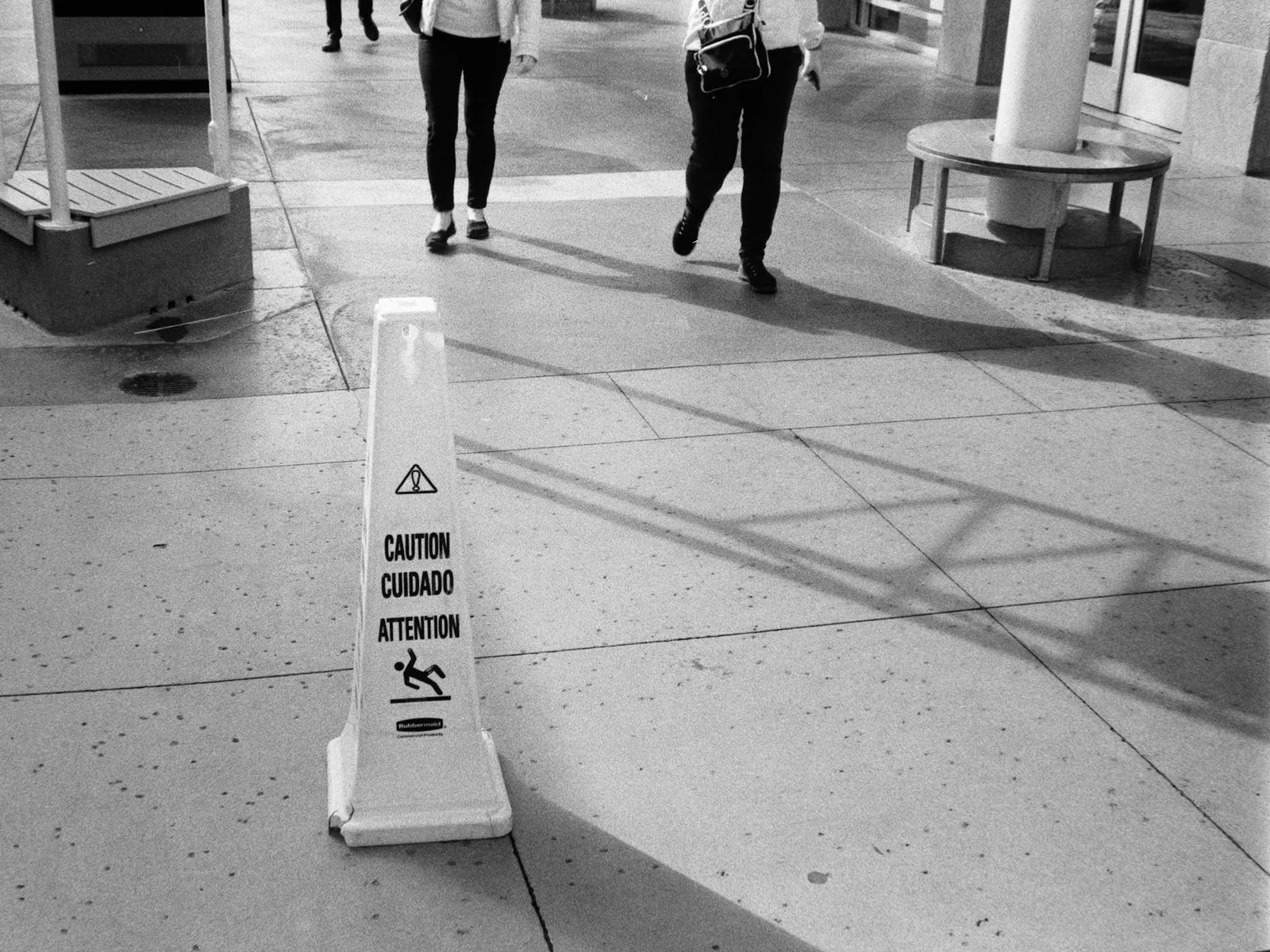
A wet floor can be dry by the time you return from urgent care. A curled mat can be replaced. The employee who helped you may have finished a shift. After a fall, the most useful evidence is often ordinary and temporary. Your first priority is your health; when help is available, ask someone to record the scene accurately. The goal is to preserve the condition and its context before they change.
Key Takeaways
- Document the precise hazard and its location, not just the injury.
- Timing can matter when the dispute is whether a business should have discovered a condition.
- Save original photographs, witness contacts, and a copy of any incident report you receive.
Why the timing matters in Texas
For an injured customer bringing an invitee premises-liability claim, the condition alone is not the whole case. Texas law also examines the owner’s or occupier’s knowledge, unreasonable danger, reasonable care, and causation. In H-E-B, LP v. Peterson, the Supreme Court of Texas emphasized that constructive notice of a temporary hazard requires evidence of how long the condition existed.
The practical lesson is to preserve information about the particular place and time. A business having experienced a leak elsewhere does not, by itself, establish notice of the puddle involved in your fall. This article focuses on documentation; a visitor’s legal status and other facts can change which duties apply.
Source: Supreme Court of Texas: H-E-B, LP v. Peterson, No. 24-0310 (opinion)
Capture the walking route
When it is safe, photograph the area from several distances. A wide view can show how someone approaches a doorway or aisle. A closer image can show the surface, object, mat edge, lighting, or liquid you believe was involved. Include signs and barriers in their actual locations. Do not move a warning sign or create a clearer-looking scene.
Write down the specific location: the entrance used, aisle or department, nearby display, floor level, and approximate time. “Near the registers” may be hard to reconstruct later. “The second checkout lane, beside the drink refrigerator” gives someone a better starting point. If your phone’s clock or a receipt helps establish timing, preserve it.
- The approach to the area and the condition as you found it.
- Nearby warnings, cones, mats, handrails, or obstructions.
- The relevant shoes and clothing in their existing condition.
- Any available receipt, reservation, or other record connecting you to the location.
Separate observations from assumptions
Record what you personally noticed before and after the fall. If someone says they reported the condition earlier, note who said it and ask for contact information. A witness who saw a spill develop may know something different from a person who arrived afterward. Preserve both accounts without suggesting what either person should say.
It is fine to write “I do not know when the liquid appeared.” Filling that gap with a guess can make the record less reliable. Note relevant activity, such as an employee cleaning the area, without turning it into an unsupported claim that the employee knew about the condition before the accident.
Record what you saw, when you saw it, and who can help confirm it.
Report the incident and keep your own copy
Tell the manager or responsible person what happened and request that it be documented. Give a factual account rather than agreeing to wording you do not understand. If a form leaves something important out, ask how to add it. Request a copy of the completed report and record the name of the person who took it.
A business may not provide its internal report immediately. If that happens, preserve your own dated account and any email or message confirming that you reported the fall. Keep that record separate from later insurance correspondence. Do not assume that reporting the incident automatically preserves every camera recording or maintenance document.
Identify records that may change or disappear
Look for possible sources of information: cameras facing the entrance, a nearby tenant’s camera, cleaning activity, or people who walked through the area earlier. Tell your attorney where those sources may be. The useful video may include the period before your fall, rather than only the moment you lost your footing.
Counsel can evaluate requests for relevant footage, inspection records, complaints, maintenance documents, or other materials. A request must be directed to the right holder; the property owner, tenant, and management company may be different organizations. Do not assume that a request guarantees the records exist or that you are entitled to immediate access.
Document recovery without trying to diagnose it
Seek appropriate medical care and explain how you fell, where you felt pain, and relevant prior conditions. Follow your clinician’s instructions. If new symptoms develop or your condition changes, contact a medical professional rather than using an online article to decide what they mean.
Keep appointment records, bills, prescription receipts, and work restrictions. A brief daily note can capture practical effects: a missed shift, needing help with stairs, or difficulty carrying groceries. Be specific about what you could and could not do. Save original documents and avoid deleting or altering relevant messages or photographs.
For a case review, bring your chronology, location details, available images, witness contacts, and any report or insurer letter. Identify unanswered questions explicitly. A lawyer can evaluate the applicable duty, evidence gaps, and deadlines without assuming that a fall on someone else’s property automatically establishes a claim.
Frequently Asked Questions
Do I have no case if I did not take a photograph?
A photograph is one possible source of evidence. Witnesses, reports, video, and other records may still matter. Explain why no photograph was taken and what information remains available rather than assuming the question is settled.
Does a warning cone automatically decide responsibility?
A cone’s presence does not let a general article decide a case. Its placement, visibility, relationship to the hazard, and the surrounding facts require review. Document the scene as it was, including any warning you saw.
Should I go back and ask employees to repeat what they said?
Preserve the words you remember and identify the speaker for your attorney. Avoid pressuring anyone, rehearsing an account, or entering restricted areas. A witness’s independent recollection is more useful than a statement shaped through repeated prompting.
This article provides general educational information about Texas law and is not legal or medical advice. The rules that apply depend on the facts, the parties, and the relevant dates. Reading this article or contacting the firm does not create an attorney-client relationship.